




Article Series
Author: Rehabilitation Alliance Hong Kong
Publication Year: 2024
If everyone has paid attention to our first two articles, you may have tried searching online for this manual, after reading it, did you notice what concepts the manual applies or which terms appear more frequently? You might not have noticed, but it is “accessibility”.
The manual often mentions one point, which is that the facilities provided are convenient for people with disabilities to use, helping them to travel. However, if you have strong observational skills, you will likely notice that ramps are not only used by wheelchair users; young children who have not fully learned to walk will also use them, young people carrying heavy objects will use them, and families helping the elderly and young will use them as well. This shows that facilities that facilitate traveling and participating in society are not limited to specific groups for use.
Therefore, RAHK has always advocated that the new manual should practice and apply the concept of accessibility, and facilities should implement the concept of universal design comprehensively. You might ask, “Aren’t ‘barrier-free’ and ‘accessible’ the same?” The two concepts are similar, but the latter is essentially different and more widespread. “Barrier-free” refers to the presence of some obstacles in the environment, for which we need to make special arrangements to eliminate the barrier; “accessible”, on the other hand, means that during the planning stage of the building, the diverse use by different individuals has already been considered, ensuring that facilities are usable by everyone, including people with disabilities, without additional special arrangements or redesigns after completion.
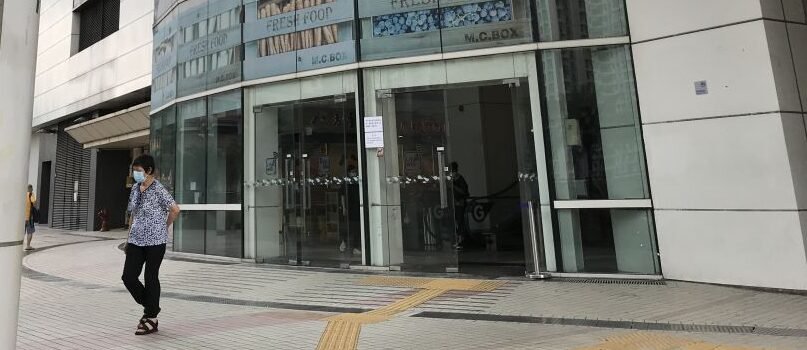
To illustrate with a simple example, take the entrance of a building: if a building has steps at the main entrance, wheelchair users cannot enter through the front and need to have a ramp built beside the main entrance or at the side door to allow them to enter, which is barrier-free; if the building is designed and constructed with consideration for the future use by various individuals, using a level entry to the main door, then there is no need to build a ramp, and everyone can enter equally in the same way.
We believe that this manual should provide direction and a planning blueprint for the future development of accessibility in Hong Kong. It is suggested that the newly designed manual should reference Norway’s Oslo Accessibility Action Plan to promote accessibility in urban applications, and to develop plans and timelines. Therefore, the review process of the design manual should seize the opportunity to evolve from the manual on standards for barrier-free buildings to an accessibility blueprint, putting accessibility principles into practice. The mainland’s “Law of the People’s Republic of China on Barrier-Free Environment Construction” also comprehensively applies “Universal Design”. We cannot remain stagnant in the concept of barrier-free; we should further advance.